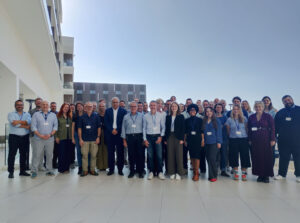
On 13-15.01.2026 in Warsaw, Poland, ERDN organised the 4th Consortium Meeting of the SOILSCAPE Project in Poland, bringing together project partners for three days of discussion, reflection and exchange. The meeting officially opened at Willa Waleria in Milanówek, a historic garden-city near Warsaw, whose artistic surroundings offered an inspiring context to reflect on the relationship between soil and art. The programme began with a collective soil song led by Agata Sałachewicz from the Ecological Folk University in Grzybów, creating a shared starting point for the meeting.
During the following sessions, consortium members reviewed the outcomes of recent activities, discussed upcoming tasks and work packages, and exchanged experiences related to current and future project actions. The second day took place in the Michałowice Municipality, a member of the Polish Soil Orchestra and a partner in the sister project SoilTribes, where discussions focused on next project stages, the planned Soil Festivals in Portugal and France, and the needs of Soil Orchestras in view of their national events in 2027, alongside learning about local social and environmental initiatives.
The final day was hosted in the heart of Warsaw at the Ujazdowski Castle Centre for Contemporary Art, in the context of the exhibition Soil and Friends. This artistic setting highlighted the core idea of the SOILSCAPE project – connecting science and art. The meeting concluded with a collective singing of the soil song, symbolically closing an intensive and inspiring consortium gathering organised by ERDN.
GRACE Project Kick-off Meeting in Venice
The GRACE project kick-off meeting took place in Venice on 27–29 October 2025, marking the official launch of GRACE – Growing Climate Resilience in Remote Rural Areas through Community Empowerment, a new Horizon Europe project in which ERDN is a partner. Within the project, ERDN is responsible for one of the tasks in WP6, focused on developing an exploitation strategy to enhance uptake and ensure the long-term legacy of the project’s solutions.
GRACE brings together 27 organisations from 16 countries with the shared goal of strengthening the capacities of rural and small to medium-sized communities across Europe’s Remote Rural Areas to adapt to climate change. The project will co-develop innovative, nature-based climate adaptation solutions with five Demonstrator Regions in Portugal, Italy, Austria, Denmark and Sweden, while preparing for their transfer and adoption in five Replicator Regions in Greece, Slovakia, Ireland, Latvia and Ukraine.
The kick-off meeting in Venice brought together the full consortium to align visions, define priorities and set the path for empowering rural communities to become active agents of change in building a more climate-resilient future.
NEMESIS-Soil Project Kick-off Meeting in Cyprus
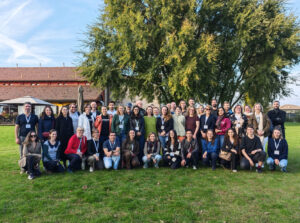
From 26–28 November 2025, the consortium of the new European project NEMESIS-Soil came together for its official kick-off meeting in Cyprus. The project was launched with an inspiring gathering in Ayia Napa, bringing together partners to start a shared journey toward healthier soils across the Mediterranean region.
NEMESIS-Soil is a bold step toward building a Mediterranean network of Soil Health Living Labs aimed at protecting soils, strengthening biodiversity and tackling desertification through collaborative, place-based approaches. The consortium includes 37 partners and two associated partners from 12 countries across Europe, North Africa and beyond, and is coordinated by the ERATOSTHENES Centre of Excellence (Cyprus).
Over three intensive days, the leaders of all work packages set the direction for the months ahead, aligning goals, priorities and the overall vision of the project. Living Labs from Cyprus, France, Italy, Spain, Tunisia and Algeria shared their perspectives, highlighting the diversity of Mediterranean contexts. By bringing together local communities, farmers, scientists and policymakers, the Living Lab approach enables the co-creation of practical, real-world solutions for improving soil health.
The ERDN team, represented by Katarzyna Gizińska and Marcin Żekało, actively contributed to the discussions. Within the project, ERDN is responsible for Tasks 1.3 and 1.4, focusing on the development of the multi-actor approach, which forms a key foundation for effective collaboration across all Living Labs.
Participants also had the opportunity to observe the wide range of soil conditions in Cyprus—from fertile landscapes to severely degraded areas—gaining first-hand insight into the challenges of land degradation and desertification on the island.
A strong and promising start to the NEMESIS-Soil project—we are excited about the steps ahead.